John Ruggero wrote: 04 Aug 2026, 15:46
Regarding the A flat Fugue, you are certainly in good company, harpsi. My copy of the fugue in Bach's hand shows a D natural and most editions I checked follow suit. There is one manuscript by a Bach student that has no natural sign, and perhaps the copy shown in your post is based on that manuscript.
Good to hear! I'll have to check the sources again – I really thought I could trust the NBA...
John Ruggero wrote: 05 Aug 2026, 00:26
But the autograph and the several contemporary copies of the autographs at IMSLP all have E natural.
In my opinion this is really the core of the question. Do they "have" the E natural (written out), or do they "have" it (implied but not written out)? It is extremely common in this time that accidentals are not repeated directly after the barline. Also, have a look at bar 18 of the same piece (screenshotted from Octo's post):
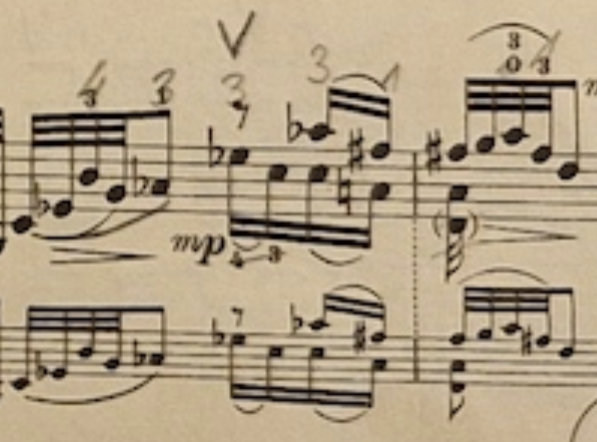
- Skärmbild 2026-08-05 061723.png (327.47 KiB) Viewed 518 times
This is related to the passage in bar 5–6. Flesch added a natural to the last

of the bar, but there is none in the source:
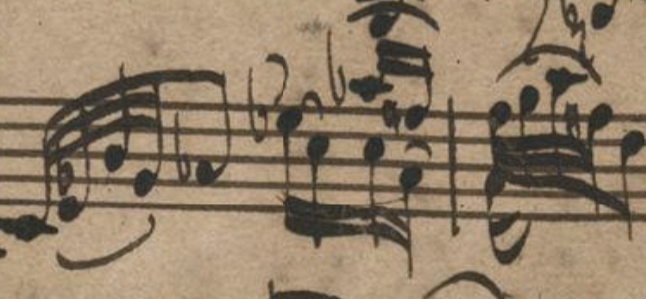
- Skärmbild 2026-08-05 063135.png (286.6 KiB) Viewed 518 times
Apparently Flesch found it correct to keep the

from before the barline in bar 6, and correct to add the implied

from after the barline in bar 18. I actually do agree with Flesch on both occasions. An e
on the start of bar 6 breaks the chain of sighs, and introduces a kind of chromaticism that does not exist in the piece elsewhere (correct me if I am wrong!). The connection e
c

does, for instance in the shape of a
f
in bar 18.
But one could play with thought of keeping the a
before the D major chord in bar 19, to echo the epiphany moment from bar 6! Then again, maybe epiphanies are meant to happen only once...

 with tone D. As John said: there are Urtexts and Urtexts.